Faces behind the course: Meet Maria Helena Saari and Anna Vladimirova!
How can education help us to rethink our relationship with the more-than-human world? Postdoctoral researchers Maria Helena Saari and Anna Vladimirova from the University of Oulu are inviting students to do exactly that, through their course Critical and Multispecies Approaches to Environmental Education. This course has also been added to the UniPID Virtual Studies Course Catalogue. Maria and Anna kindly shared their perspectives on sustainability, pedagogy, and deep curiosity about human and more-than-human coexistence.
Maria Helena Saari, a Postdoctoral Research Fellow and Environmental Educator, and Anna Vladimirova, also a Postdoctoral Research Fellow and member of the AniMate Research Collective, have been developing environmental education courses together for several years.
Their collective teaching journey began in 2019 with the course Introduction to Environmental Education at the University of Oulu. “We taught the first cohort in January–February 2020, just before the outbreak of the COVID-19 pandemic. It was both the first and the last group we were able to teach face-to-face before instruction moved online”, they describe.
The course was developed in response to the lack of English-language environmental education offerings at the University of Oulu that incorporated multispecies and critical perspectives on sustainability. This course laid the foundation for their UniPID course, Critical and Multispecies Approaches to Environmental Education, which expands these ideas further. The course offers a more focused and cohesive exploration of these themes, drawing from diverse contexts, including Finland and Namibia, which enriches the teaching and learning experience.
Rethinking sustainability beyond the human perspective
At the heart of Maria and Anna’s teaching is a shared concern that sustainability discussions often overlook deeper structural questions, as well as the voices of vulnerable communities and the more-than-human world. “We believe that higher education, and teacher education in particular, remains underdeveloped in its capacity to foster critical conversations about sustainable development, capitalist logics, and the continued exploitation of the Earth and vulnerable communities. Animals, plants, insects, fungi, among others and ecosystems at large are often treated as passive recipients of anthropogenic climate impacts and as exploitable resources rather than as beings with intrinsic value, as stakeholders and participants in shared ecological futures”, they explain.
According to Anna and Maria, their course is a modest contribution toward addressing that gap: “We recommend this course to students who are concerned with climate change, eco-anxiety, environmental justice, and the future of our planet, and who wish to explore these issues through critical and multispecies perspectives and be part of a growing community of practice rooted around collective and creative inquiry, compassion and action.”
In line with UniPID's mission, the course has been developed to engage with diverse approaches and ways of knowing. Through engaging with diverse perspectives, human and more-than-human perspectives, Maria and Anna hope to highlight respect for diversity and responsibility among the students and support universities in addressing global sustainability challenges.
Learning across places, disciplines and experiences
The course content evolves continuously and is shaped by both research and the latest debates and discussions in the field. In the upcoming UniPID course, Maria and Anna will include diverse educational frameworks related to sustainability, including place-responsive education, ecojustice and peace education, and multispecies approaches; critical perspectives on socio-political dimensions of sustainability and environmental justice; eco-anxiety, and reflection on responses to the climate crisis across local, regional and global contexts.
A particularly exciting element of the course is the continued collaboration with the University of Namibia, namely Ms. Richardine Poulton-Busler, with whom Maria and Anna have collaborated with for the last four years. This collaboration brings new learning experiences for all course participants. The course is designed in a way that students can tailor their learning journey in relation to their specific interests.
New elements of the course also include case studies that illustrate critical and multispecies approaches to environmental education, including regenerative and embodied ways of learning. They will be presented in collaboration with experts, including those in bioacoustics, outdoor education and frontline conservation actors.
Inspiration from research, art and the world around us
For both Anna and Maria, inspiration comes from a variety of sources, including academic research, creative work as well as lived experiences.
Maria’s work has been informed and shaped by a variety of places, people, encounters, art, animals, and nature. Dinesh Wadiwel’s book War Against Animals (2015) has been particularly influential as an analytical lens, as well as the work of ecojustice education scholars, particularly that of Johnny Lupinacci. Maria draws inspiration from diverse organisations, including education organisations such as the Institute for Humane Education, as well as teachers, students and frontline actors, particularly rangers. “To understand the dedication, diverse roles, courage, and challenges of frontline actors, particularly rangers, who can be seen as unparalleled environmental educators and ambassadors for peaceable human-nature relations, podcasts such as the Rhino Man Podcast have been enlightening. The work of photojournalists and documentary filmmakers is a powerful storytelling method for exploring the climate crisis, as well as the work of creative collectives such as justwondering…”
Anna also finds inspiration from theory and art. She points to films like Hayao Miyazaki’s Princess Mononoke; Eduardo Kohn’s book How Forests Think, or the music of Swedish Sámi singer Katarina Barruk, e.g. Miärralándda. “I have been very inspired by the book of Alistair Stewart (2020) Developing place-responsive pedagogy in outdoor environmental education: A rhizomatic curriculum autobiography. This book served as a prime example of what’s possible when we learn to decolonize places and respond to them in a very personal, unique and relational way. Another text that stayed with me was Breathing Climate Crises: Feminist Environmental Humanities and More-than-Human Witnessing by Blanche Verlie and Astrida Neimanis (2023).”
Learning together and from each other
“The greatest inspiration for this course comes from the students themselves, from the questions they ask, the stories they share, and the experiences they bring from diverse multicultural contexts around the world. We have been fortunate to each year have an incredibly diverse group of international students join our course and we are excited to grow our community of practice through the UniPID course”, Maria and Anna say.
Maria and Anna transform and learn together with their students, and one of the most rewarding aspects of teaching is witnessing how perspectives grow and evolve over the duration of the course.

Maria Helena Saari is a Postdoctoral Research Fellow and Environmental Educator at the Faculty of Education and Psychology, University of Oulu, where she serves as Co-lead of the education work package in the Strategic Research Council project MUST: Enabling Multispecies Transitions in Cities and Regions and PI and Co-lead of the University of Oulu International Strategic Partnership with the University of Namibia on human-animal coexistence in the Kavango-Zambezi Transfrontier Conservation Area.

Anna Vladimirova is a Postdoctoral Research Fellow at the Faculty of Education and Psychology, University of Oulu (Finland). She is also a long-standing member of the AniMate Research Collective. Her research and practice stem from theories of critical posthumanism and new materialism and her main focus in teaching is on critical outdoor learning, place-responsive pedagogy, and ways we can decolonise conventional knowledge about places.
Sign-up for UniPID Virtual Studies opens closer to the start of the academic year 2026–2027. Discover more online courses here!
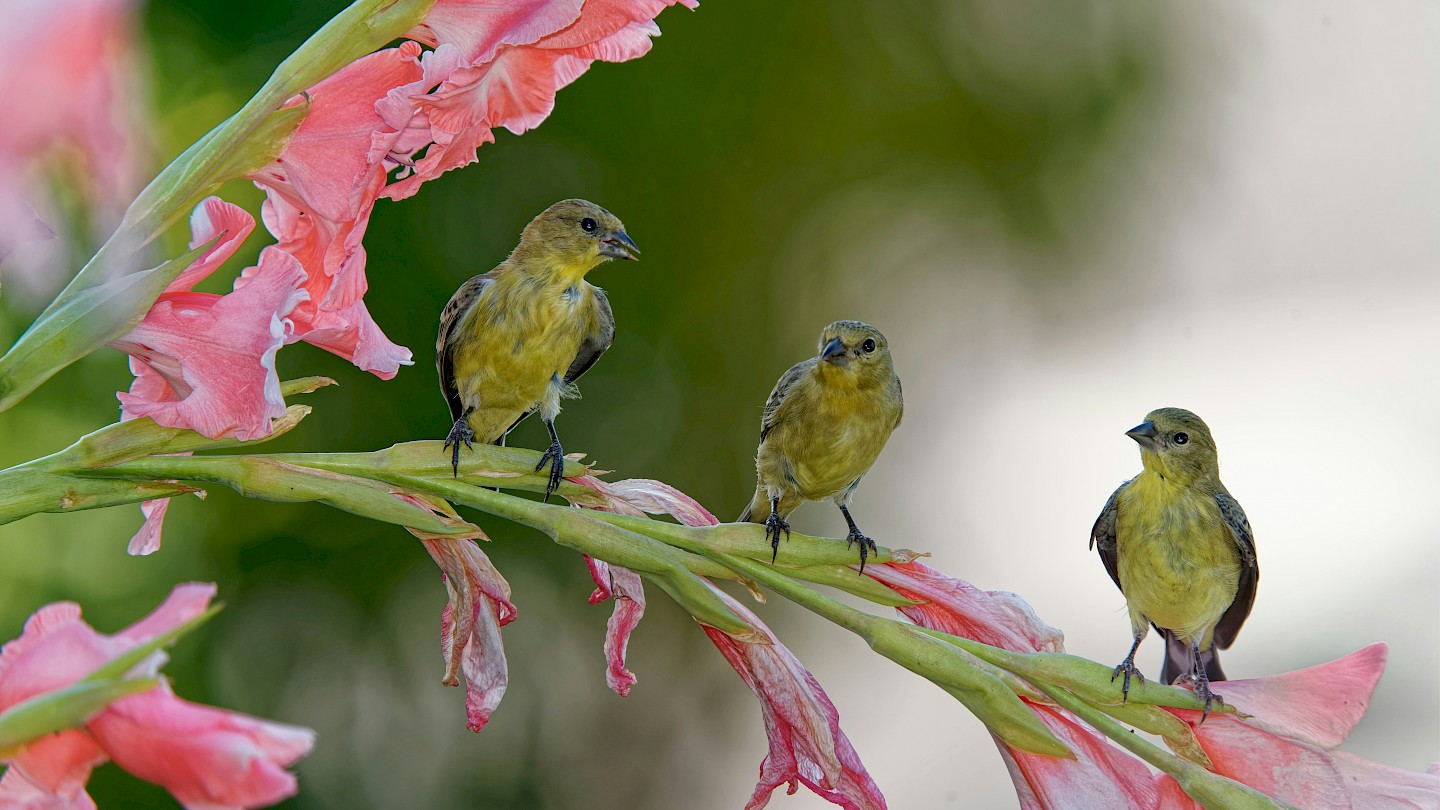
Banner photo credits: Patrick Bigelow, 2025 on Unsplash.